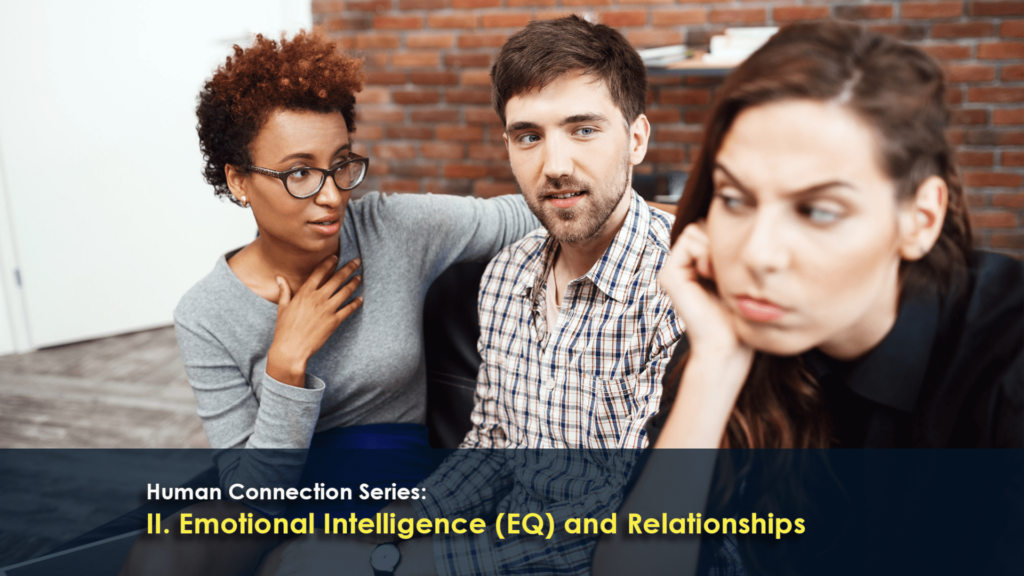
The quality of our relationships often dictates the quality of our lives. Whether it’s the bonds we share with family, friends, colleagues, or romantic partners, the strength and depth of these connections can be significantly influenced by our level of emotional intelligence (EI). Understanding emotional intelligence and its role in fostering healthier, more meaningful relationships is essential for personal and professional success.
What is Emotional Intelligence?
Emotional intelligence, often referred to as EQ, is the ability to recognize, understand, and manage our own emotions, as well as the emotions of others.
It involves being aware of emotional dynamics and using this awareness to navigate interactions effectively. This skill is vital in building and maintaining relationships, as it allows for greater empathy, improved communication, and conflict resolution.
Enhancing Relationships Through Emotional Intelligence
1. Self-Awareness: The Foundation of Emotional Intelligence
Self-awareness is the cornerstone of emotional intelligence. It involves understanding your emotions, strengths, weaknesses, values, and how they influence your behavior.
Those with high self-awareness can recognize how their feelings affect themselves and others, making it easier to adjust their responses and actions in social settings.
For instance, being aware of how stress affects your patience can help you remain calm during tense situations, thereby maintaining harmony in relationships.
2. Empathy: Understanding Others
Empathy is the ability to understand and share the feelings of another.
It is a fundamental component of emotional intelligence that enhances interpersonal relationships by fostering compassion and understanding. Empathetic individuals are better at tuning into the emotional states of others, which aids in responding to their needs more effectively.
This skill is essential in both personal and professional settings, as it helps build trust and rapport, critical elements for any successful relationship.
3. Effective Communication: Expressing and Listening
Communication is the backbone of strong relationships. Emotional intelligence enhances communication by enabling individuals to express themselves clearly and listen actively.
Effective communication includes both verbal and non-verbal cues, such as body language and tone of voice.
By understanding these cues, emotionally intelligent individuals can interpret the real meaning behind words, leading to more meaningful and productive conversations.
4. Conflict Resolution: Navigating Challenges
No relationship is immune to conflict. However, those with high emotional intelligence are better equipped to handle disputes constructively.
They are skilled at recognizing the emotions driving the conflict and can address issues without escalating tensions.
By remaining calm and focused, emotionally intelligent individuals can mediate discussions, foster mutual understanding, and find solutions that satisfy all parties involved.
5. Self-Regulation: Managing Reactions
Self-regulation involves managing your emotions and reactions, especially in challenging situations. It is the ability to think before acting and control impulsive behaviors.
This skill is crucial in relationships, as it allows individuals to remain composed and respond thoughtfully rather than reacting out of emotion.
By practicing self-regulation, one can maintain stability in relationships, even during turbulent times.
6. Motivation: Driving Positive Interactions
Emotionally intelligent individuals are often highly motivated and have a strong drive to achieve personal and relational goals.
This internal motivation is not just about external rewards but is driven by a deep-seated need to fulfill personal values and aspirations.
In relationships, this translates to a commitment to nurture and grow connections, fostering a positive and supportive environment.
Building Lasting Connections
The role of emotional intelligence in building lasting relationships cannot be understated. Emotionally intelligent individuals are often seen as more approachable and understanding, qualities that draw people towards them. By enhancing emotional intelligence, individuals can develop deeper and more fulfilling connections with those around them.
As we strive to improve our emotional intelligence, it’s essential to practice these skills regularly. Reflect on your emotional responses, engage actively with others, and continuously seek to understand the emotional landscapes of those you interact with. With time and effort, emotional intelligence can become a powerful tool for enhancing your relationships and enriching your life.
Understanding and embracing emotional intelligence is not just about personal growth—it’s about enriching the tapestry of our lives through meaningful and lasting relationships. As you embark on this journey, remember that every interaction is an opportunity to practice and refine these skills, leading to stronger, more resilient connections with those you hold dear.
💡 Did you know? 💡
In today’s dynamic business world, CEOs are increasingly valued for their Emotional Intelligence (EQ) rather than just their Intellectual Quotient (IQ).
While IQ lays the foundation for cognitive abilities, it’s the EQ that truly unlocks leadership potential.
CEOs with high EQ can effectively navigate interpersonal dynamics, resolve conflicts, and inspire their teams towards shared goals. This ability to connect and empathize with team members not only fosters a positive work environment but also drives superior results and innovation.
Embracing EQ in leadership is the key to a thriving, successful organization!
Thank you for joining me on this journey of exploration and growth. If you enjoyed this blog, I’d love for you to stay connected by subscribing to my newsletter, where you’ll receive updates on new content and insights directly to your inbox.
Don’t forget to follow me on Facebook, LinkedIn, Medium, and X for more inspiration and to be part of our growing community.
Your thoughts and experiences are invaluable, so feel free to share them in the comments.
Let’s continue to learn and grow together!
SOURCES
GoodTherapy – Making Love Last: The Importance of Emotional Intelligence
Harvard Business School Online – Emotional Intelligence in Leadership: Why It’s Important
HelpGuide – How to Be Emotionally Intelligent in Love Relationships
LinkedIn Pulse – The Real Reason Your Boss Lacks Emotional Intelligence
Medium – The Power of Emotional Intelligence in CIO Leadership
National Institute of Standards and Technology (NIST) – Which Is More Important for Leaders: EQ or IQ?
Refinery29 – How To Spot Emotional Intelligence In A Partner
ScienceDirect – The Role of Emotional Intelligence in Building Relationships
Truity – Emotional Intelligence in Relationships | True You Journal
VGM & ASSOCIATES – The IQ vs. EQ Debate: Why Emotional Intelligence Trumps Intellectual Quotient in Effective Leadership